
Uppercase vs Lowercase in Writing
9 Powerful Uppercase vs Lowercase in Writing Rules That Instantly Improve Readability
Understanding Uppercase vs Lowercase in Writing is essential for creating professional, readable, and grammatically correct content. Whether you are writing blog posts, academic essays, business emails, social media captions, website headlines, or marketing copy, capitalization directly affects readability, user engagement, and credibility.
Many writers underestimate how important letter case is. However, incorrect capitalization can make content appear unprofessional, confusing, or even difficult to read. Search engines and users both prefer clean, well-structured writing with consistent formatting.
In this detailed guide, you will learn the exact differences between uppercase and lowercase letters, when to use each style, common capitalization mistakes, SEO best practices, and professional formatting tips used by editors and content marketers in the USA, UK, Canada, and Australia.
You will also discover useful text tools that instantly improve capitalization accuracy and writing efficiency.
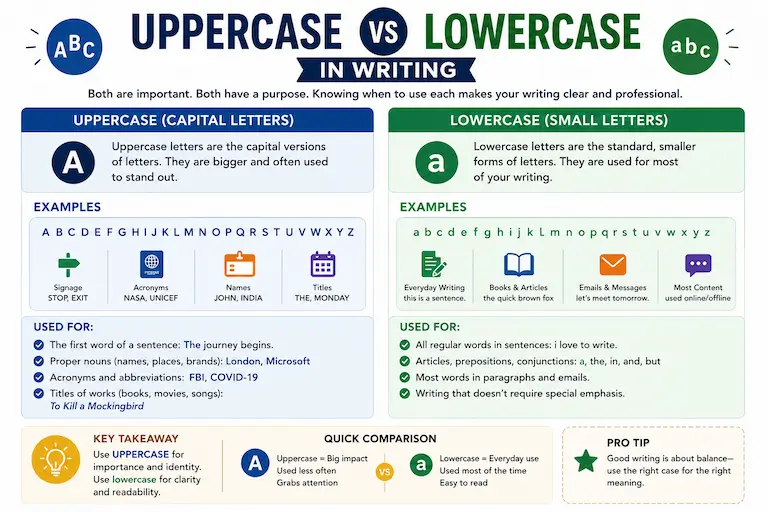
What Is Uppercase in Writing?
Uppercase letters are capital letters.
Examples include:
- A
- B
- C
- D
Uppercase writing is commonly used for:
- Sentence beginnings
- Proper nouns
- Acronyms
- Titles
- Headings
- Brand names
Example of Uppercase Usage
- London is one of the world’s leading financial centers.
- NASA launched a new mission.
- The Effects of Social Media on Education
Uppercase letters help readers identify important words and sentence structures quickly.
What Is Lowercase in Writing?
Lowercase letters are small letters.
Examples include:
- a
- b
- c
- d
Lowercase writing is used for most regular text in everyday communication.
Example of Lowercase Usage
- This article explains grammar rules clearly.
- Students often confuse capitalization standards.
Lowercase text improves reading flow and prevents visual strain.
Uppercase vs Lowercase in Writing: The Main Difference
The primary difference between Uppercase vs Lowercase in Writing is visual emphasis and grammatical function.
Uppercase: Capital letters
Lowercase: Small letters
Quick Comparison Table
| Feature | Uppercase | Lowercase |
|---|---|---|
| Appearance | Capital letters | Small letters |
| Usage | Emphasis and structure | Standard writing |
| Readability | Strong but aggressive | Smooth and natural |
| Common Use | Titles, names, acronyms | Paragraphs, sentences |
| SEO Impact | Better for headings only | Better for readability |
Why Capitalization Matters in Writing
Proper capitalization improves:
- readability
- professionalism
- grammar accuracy
- user experience
- SEO formatting
Incorrect capitalization creates confusion and weakens trust.
Example
Incorrect:
- THIS ARTICLE explains Grammar mistakes.
Correct:
- This article explains grammar mistakes.
The second example is cleaner and easier to read.
When to Use Uppercase Letters
Understanding when to use uppercase letters is critical.
Capitalize the First Word of a Sentence
Correct:
- Writing skills improve with practice.
Capitalize Proper Nouns
Names of people, places, and organizations should use uppercase.
Examples:
- Canada
- Australia
- John Smith
Capitalize Acronyms
Examples:
- SEO
- NASA
- USA
- UK
Capitalize Titles
Most headlines use title case capitalization.
Example:
- How to Improve Content Writing Skills
When to Use Lowercase Letters
Lowercase letters are used in most body text.
Lowercase Common Nouns
Correct:
- The company hired a new manager.
Lowercase Articles and Short Prepositions
Examples:
- a
- an
- the
- of
- on
- at
In title case, these words are usually lowercase unless positioned at the beginning.
Uppercase vs Lowercase in Writing: Common Mistakes
Many writers make capitalization errors without realizing it.
Writing Entire Sentences in Uppercase
Incorrect:
- THIS BLOG WILL HELP YOU IMPROVE WRITING.
Using all caps feels aggressive and reduces readability.
Correct:
- This blog will help you improve writing.
Random Capitalization
Incorrect:
- The internet Has Changed Modern Marketing.
Correct:
- The internet has changed modern marketing.
Incorrect Title Formatting
Incorrect:
- how To Improve Seo Rankings
Correct:
- How to Improve SEO Rankings
Uppercase vs Lowercase in Writing for SEO
Search engines prioritize user experience.
Proper capitalization improves:
- click-through rates
- readability
- engagement
- headline clarity
SEO Best Practices
- Use title case for headlines
- Avoid ALL CAPS in titles
- Keep formatting consistent
- Use readable capitalization patterns
A properly formatted title looks more trustworthy in search results.
The Psychology Behind Uppercase and Lowercase Text
Uppercase text creates visual emphasis but can feel aggressive if overused.
Lowercase text feels:
- conversational
- modern
- readable
- user-friendly
This is why modern websites use sentence case or title case instead of all caps.
Brands increasingly prefer lowercase branding because it feels approachable.
Examples include:
- adidas
- ebay
Uppercase vs Lowercase in Academic Writing
Academic writing follows strict capitalization rules.
APA Style
Uses title case for headings and sentence case for references.
MLA Style
Uses title case for titles and headings.
Chicago Style
Has detailed capitalization guidelines for publishing.
Correct capitalization improves academic professionalism and formatting consistency.
Best Tools for Managing Uppercase and Lowercase Formatting
Different writing tasks may require different formatting checks. These TextToolPro tools can help you format capitalization, review headline length, improve readability, and check academic text after you have corrected uppercase and lowercase usage.
Text Case Converter
For capitalization changes, the Text Case Converter is the most directly relevant tool. It can quickly convert text between uppercase, lowercase, sentence case, title case, and other capitalization styles.
- lowercase to uppercase
- uppercase to lowercase
- sentence case to title case
- other capitalization formats
It is especially useful when you need to correct inconsistent capitalization without retyping the text manually.
Want to fix capitalization instantly?
Character Counter Without Spaces
After formatting a headline or title, the Character Counter Without Spaces can help you check its length without counting spaces. This is useful when reviewing concise SEO titles, meta descriptions, and social media text.
Sentence Counter
Capitalization is only one part of readable writing. After correcting uppercase and lowercase usage, the Sentence Counter can help you review sentence length and paragraph structure so the finished content remains easy to read.
Word Counter for Essays
For students working on academic assignments, the Word Counter for Essays can help verify the final word count after capitalization and other formatting corrections are complete.
Real-World Examples of Uppercase vs Lowercase in Writing
Email Subject Line
Correct:
- Meeting Schedule for Monday
Incorrect:
- MEETING SCHEDULE FOR MONDAY
Blog Headline
Correct:
- Best Strategies for Content Marketing
Incorrect:
- best strategies for content marketing
Social Media Caption
Modern brands often prefer sentence case:
- New products arriving this weekend
This style feels more natural and engaging.
Official Capitalization Resources
Professional writers often follow trusted style guides.
Useful resources include:
These guides explain capitalization standards used worldwide.
How to Improve Capitalization Consistency
Use One Formatting Style
Avoid switching between title case and random capitalization patterns.
Proofread Carefully
Check headings, names, and acronyms before publishing.
Use Writing Tools
Automation tools reduce formatting errors significantly.
Follow Style Guides
Choose APA, AP, MLA, or Chicago style based on your audience.
Final Thoughts on Uppercase vs Lowercase in Writing
Understanding Uppercase vs Lowercase in Writing helps improve readability, professionalism, grammar accuracy, and SEO performance.
Whether you are creating:
- blog posts
- essays
- website content
- business emails
- social media captions
- marketing headlines
proper capitalization makes your writing clearer and more credible.
The key is balance.
Use uppercase strategically for emphasis while keeping most text lowercase for readability and user comfort.
Instantly Fix Capitalization With a Text Case Converter
Want the fastest way to correct uppercase and lowercase formatting?
this tool will:
- Convert text instantly
- Fix capitalization mistakes
- Improve title formatting
- Save editing time
- Create professional content effortlessly
It is one of the best tools for bloggers, students, editors, and digital marketers.
FAQs About Uppercase vs Lowercase in Writing
What is the difference between Uppercase vs Lowercase in Writing?
Uppercase letters are capital letters used for emphasis and structure, while lowercase letters are small letters used in regular writing.
Why is uppercase text harder to read?
All-uppercase text reduces word shape recognition, making reading slower and more visually tiring.
Should headlines use uppercase or lowercase?
Most professional headlines use title case, which combines uppercase and lowercase letters for readability and visual appeal.
What tool helps fix Uppercase vs Lowercase in Writing?
A Text Case Converter is the best tool for automatically converting and correcting capitalization styles.
Is uppercase better for SEO?
No. Excessive uppercase can reduce readability and user trust. Balanced capitalization improves SEO performance more effectively.
Why do brands use lowercase logos?
Lowercase branding often feels modern, friendly, and approachable to audiences.